Your car. Our studio.
We keep your photo of the car and render a studio around it, matched to that photo’s camera.
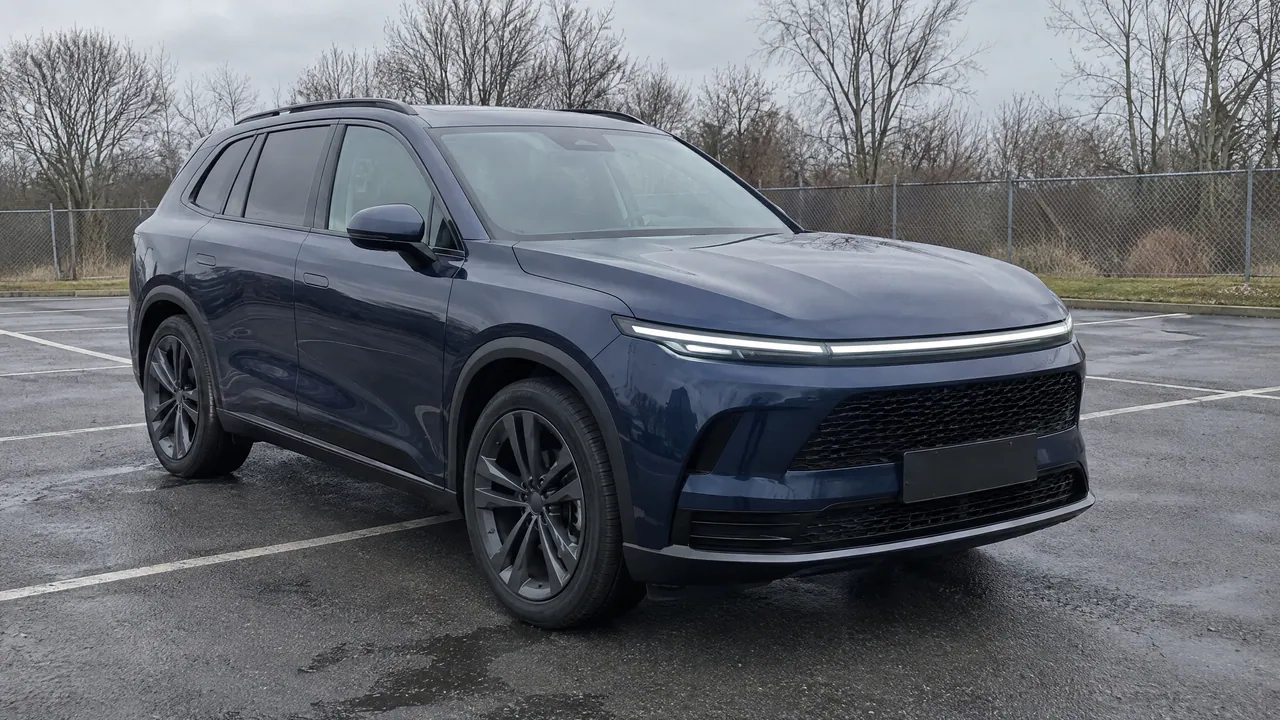
What the diagram marks on the photo:
- Outline: Found by AI and cut out with soft edges. Nothing is drawn.
- Glass: Kept as photographed.
- Paint: Keeps the reflections of the lot.
- Horizon and lens: Measured from the whole photo.
- Where the tyres meet the ground: The studio floor goes exactly here.
From your photo to a studio image.


-
Straighten.
We turn your photo upright and remove its location data before processing.
Our real-photo engine -
Find.
AI finds the car’s outline, fine edges, wheels and windows, and cuts it out with soft edges. It does not draw anything.
Our real-photo engine -
Measure.
We work out the camera. The tilt and lens come from the whole photo, the direction the car faces comes from the car, and then the height and distance that put the studio floor exactly under your tyres.
Our real-photo engine -
Render.
We render the studio for that camera, in the look you chose: wall, floor, light and the car’s contact shadow. Every photo gets its own render.
Our real-photo engine -
Place.
We place your car in it unchanged. It is not re-angled, warped or redrawn. A floor reflection and the contact shadow go under it.
Our real-photo engine -
Frame.
We frame it like a catalogue: the same car height and position on every photo, cropped to 2000 × 1125, with a fine photographic grain over the frame.
Our real-photo engine -
Adjust.
If the engine is unsure, a person moves the studio camera with sliders and approves a new render. Your photo never moves.
A person -
Check.
A person checks the image against your photo and, if it needs it, retouches by hand.
A person
The engine’s own layers

The studio, rendered for this photo’s camera

The contact shadow

The cut-out
What changes, and what never does.
What changes
- The background: wall, floor and light.
- The contact shadow and the floor reflection.
- The crop and the scale.
- A fine grain over the whole frame.
What the engine never changes
- The car’s shape, paint and damage.
- Its badges, number plate and stickers.
- The camera angle of your photo.
What we keep, honestly
- The paint keeps the reflections of where it was photographed.
- Glass is kept as photographed, so a window can show what was behind the car.
Your car’s pixels come from your photo. We cut them out, place them in a studio rendered for that photo’s camera, add the floor’s shadow and reflection, frame the image and add a fine photographic grain. The paint keeps its reflections and the glass is kept as photographed. If a person retouches anything, the image’s file says so.

Glass

Paint
A studio for every camera.
Every photo gets a studio rendered for its own camera (height, tilt and lens), so the car stands on the floor instead of floating.

Front

Side

Rear
Framed like a catalogue.
Every photo of a car is framed the same way, so a listing reads as one set. Press a picture to see the lot photo it was made from.
- Front three-quarter
- Front
- Side
- Rear three-quarter
- Rear
- Other side
- Front three-quarter, other side
When the engine is unsure, a person decides.
If the engine is unsure (an extreme wide lens, a car cut off by the frame, tyres off their mark), a person adjusts the studio camera before the image is finished.
Hand retouching, declared.
When something needs fixing (an edge, a sticker, a reflection), a person retouches it by hand, and the delivered file says it was retouched.
The tools: mask brush, eraser, pen, heal, clone stamp, patch, colour replace, glass tint and crop, with exposure, temperature, tint, saturation and shadow controls. Nothing fills in the image automatically.
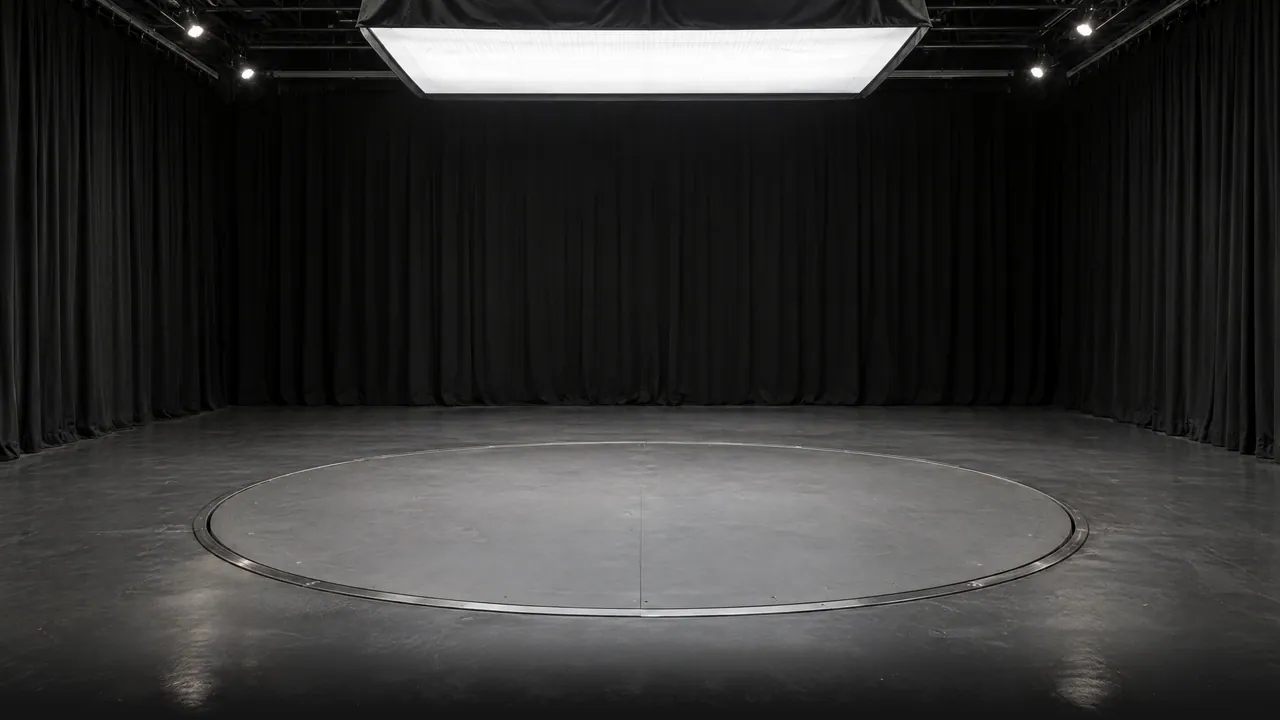
One look: Black Turntable.
A white wall over dark charcoal carpet, with one soft ring of light under the car.

Specifications.
The image
- Image out
- 2000 × 1125 JPEG (16:9). Other ratios on request: 4:3, 3:2 and 1:1.
- Photos in
- JPEG, PNG, WebP, HEIC or AVIF, up to 50 MB a photo.
- Vehicles
- Cars, vans and pickups.
The method
- Glass
- Kept as photographed.
- Where AI is used
- To find the car’s outline, wheels and windows. It never redraws the car.
- Volume
- Built for high-volume lots.
The record
- The file says
- Real photos of this car. The background was replaced with a studio backdrop; the car itself is not edited.
- On our engine
- Our real-photo engine deletes each photo and result once it is 48 hours old: it checks every hour while its server runs, and 15 minutes after each start.
- Checked by a person
- Every image.
Getting the best result.
- The whole car in frame, with its wheels visible and nothing cropped.
- The highest resolution you have.
- No extreme wide-angle lens: it is flagged for a person.
- Interiors: photograph from inside the cabin, looking out through the glass.
- Awkward angles and cars cut off by the frame cause most problems.
Best for auctions and remarketing.
We recommend the real-photo studio for high-volume stock, auctions and remarketing, and for any marketplace that asks for photos of the vehicle itself.
See it on your own cars.
Start your free pilot